IIS ISO Pod™
IIS ISO Pod™
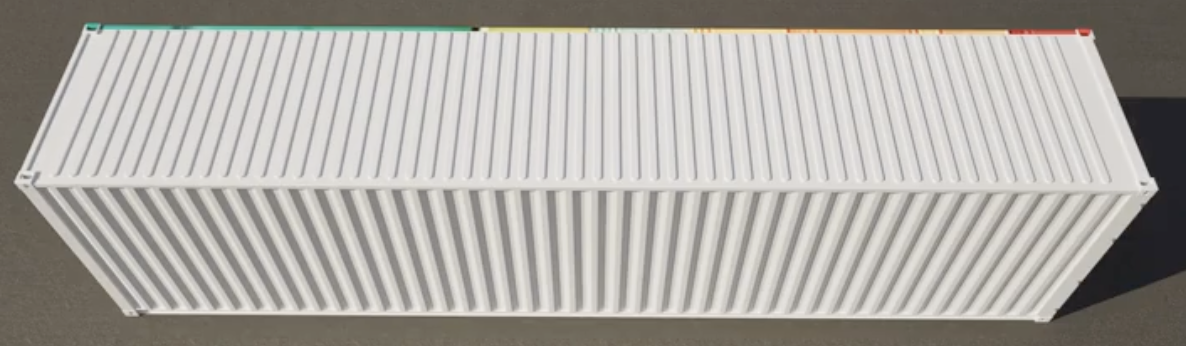
GreenBox™ — Beyond Mil-Spec-grade. Built for Discovery.
GreenBox is more than an intermodal container — it’s a self-aware infrastructure system engineered beyond Mil-Spec for extreme environments and high-value transport. Each unit integrates graphene heat exchangers, EMP shielding, and phase-change energy cells that generate and recycle power while in motion or at rest.
Guided by embedded Digital Intelligences, GreenBox systems transact autonomously, monitor cargo integrity, and sustain onboard labs or compute environments anywhere on Earth. Whether carrying medical imaging systems, data centers, or mission-critical materials, each GreenBox can function as a secure, intelligent habitat — a vessel for power, precision, and discovery.
👉 Tap or click the container image above for more information.
Powered by
GreenBox redefines what a container could be. Engineered Beyond Mil-Spec, it is designed to move not merely as cargo — but as an intelligent vessel aware of its environment, its load, and its mission.
Every surface, corner, and seam has purpose. Its unique 8’ and 10’ increment side castings extend structural integrity through interlocking rails, enabling offset, parallel, or perpendicular coupling. Magnetic locks and dual-axis rails create unmatched rigidity across shipboard stacks, stabilizing entire decks while expanding new geometries for high-value configurations.
In motion, GreenBox becomes a self-sustaining organism. Its external sensor suite—visual, thermal, weather, and long-range atmospheric—continuously maps transit conditions, while internal sensors monitor microclimate, vibration, and radiation across all payload zones.
During ocean or overland transport, GreenBox is designed to generate its own energy—absorbing BTUs through its graphene exchanger skin, harvesting solar radiation, and storing it in phase-change cassettes that operate as modular micro-reactors. The system is designed to maintain cryogenic and frozen-state cargos without external power, extending preservation windows far beyond conventional limits.
Upon arrival, GreenBox™ docks seamlessly with GreenFrame™ pads, transferring its stored thermal and electrical energy into port systems—linking directly to geothermal wells, energy recovery loops, and digital metering networks.
Beyond logistics, GreenBox acts as a transnational transactional node—a mobile data center powered by embedded Digital Intelligences. Operating across jurisdictions and in international waters, it maintains secure quantum identity, encrypted quantum keys, and autonomous CalypsoCube™ datastores that record every transaction in motion: cargo verification, carbon offsets, energy exchange, and digital customs clearance. Each GreenBox™ is designed to maintain its own sovereign digital ledger, enabling compliance, payments, and regulatory transparency in real time. Its onboard Digital Intelligences are configured to orchestrate data routing, optimize energy flow, and negotiate inter-system protocols, transforming each voyage into a live, audited exchange between nations, networks, and machines.
Every journey is a closed-loop cycle of power, data, and motion—a container that thinks, heals, and contributes wherever it lands.
— 16’ × 40’ of Intelligent Purpose
When two GreenBox containers join, they form a unified 16-foot by 40-foot interior — a precision-sealed, energy-synchronized chamber engineered for temporary or extended specialty applications. Within this Companion Container Set, every wall, ceiling, and floor is alive with function: capturing, storing, shielding, and computing.
GreenBox – Beyond Mil Spec version integrates full-spectrum kinetic, frequency, and EMP protection, with multi-layer graphene and Faraday lattice shielding on both interior and exterior surfaces. Each surface not only defends — it works. The structure continuously absorbs and converts BTUs into electrical power, feeding underfloor phase-change SMRs that operate whether or not solar panels are deployed above.
In this configuration, energy systems operate in redundant dual arrays, sustaining full functionality even under isolation. Waste heat from embedded specialty processes — imaging systems, AI clusters, or experimental workloads — is captured, re-routed, and reconstituted into usable power.
The Companion Container Set becomes a self-sustaining data center, its intelligence amplified by embedded Digital Intelligences that manage power flows, environmental equilibrium, and data integrity in real time. It is a complete beyond-AI infrastructure node — one that thinks, defends, and generates, wherever it stands.
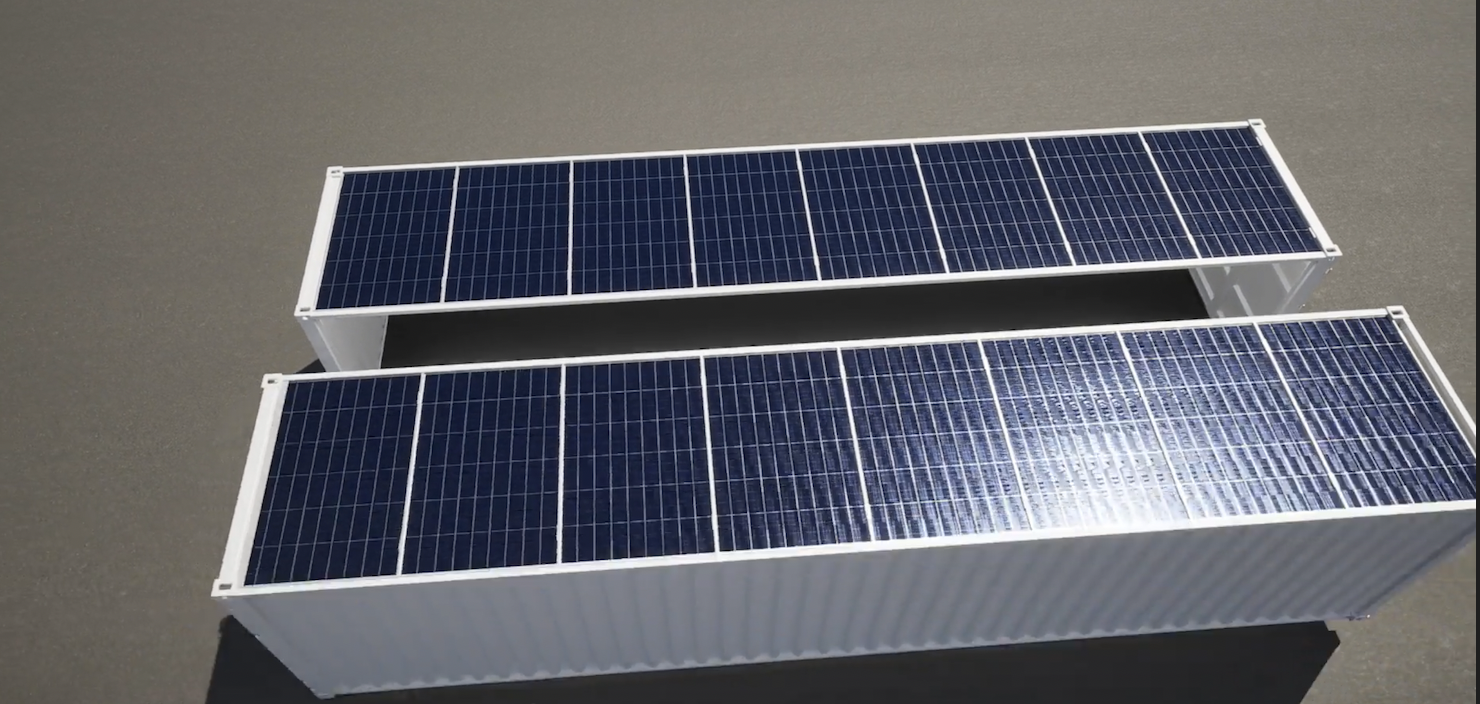
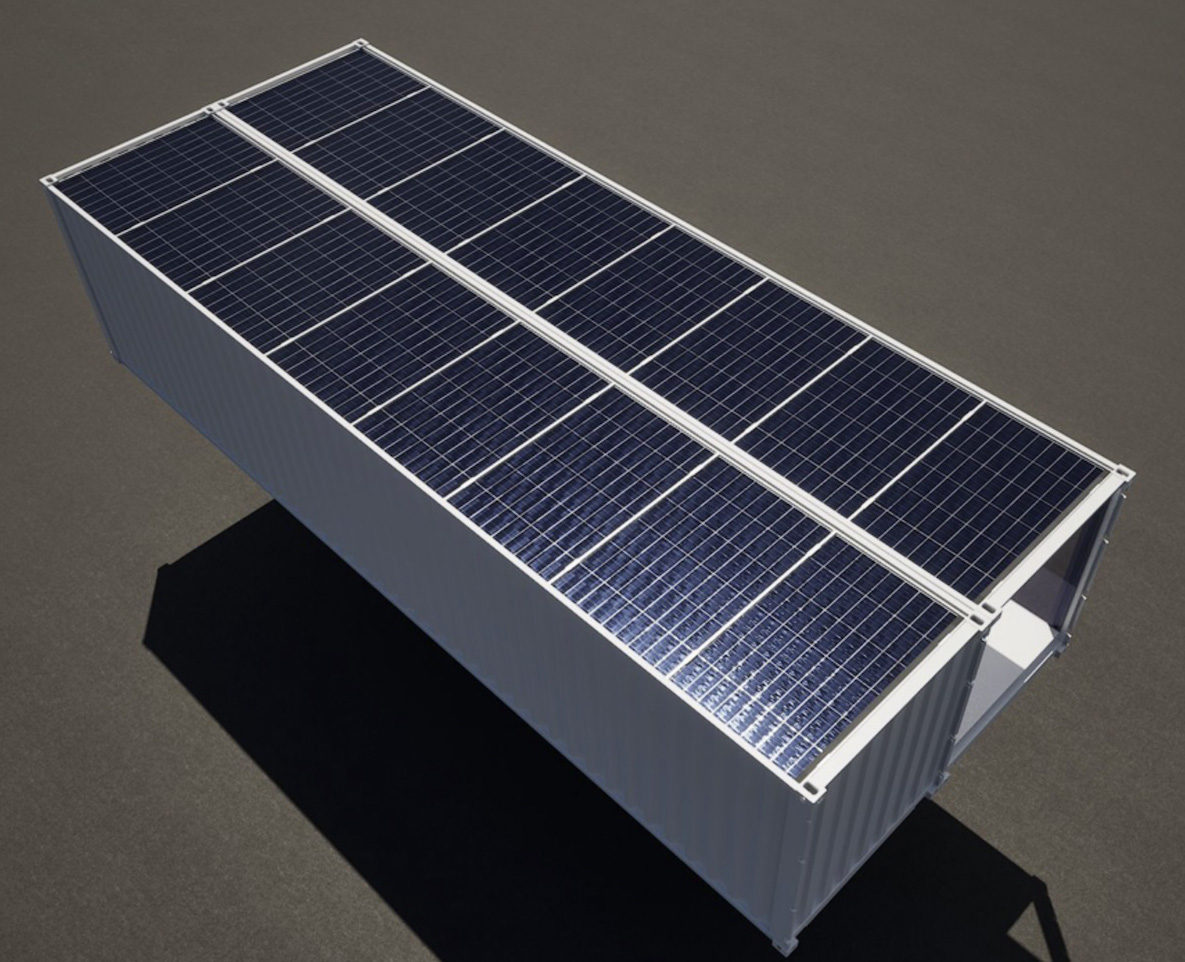
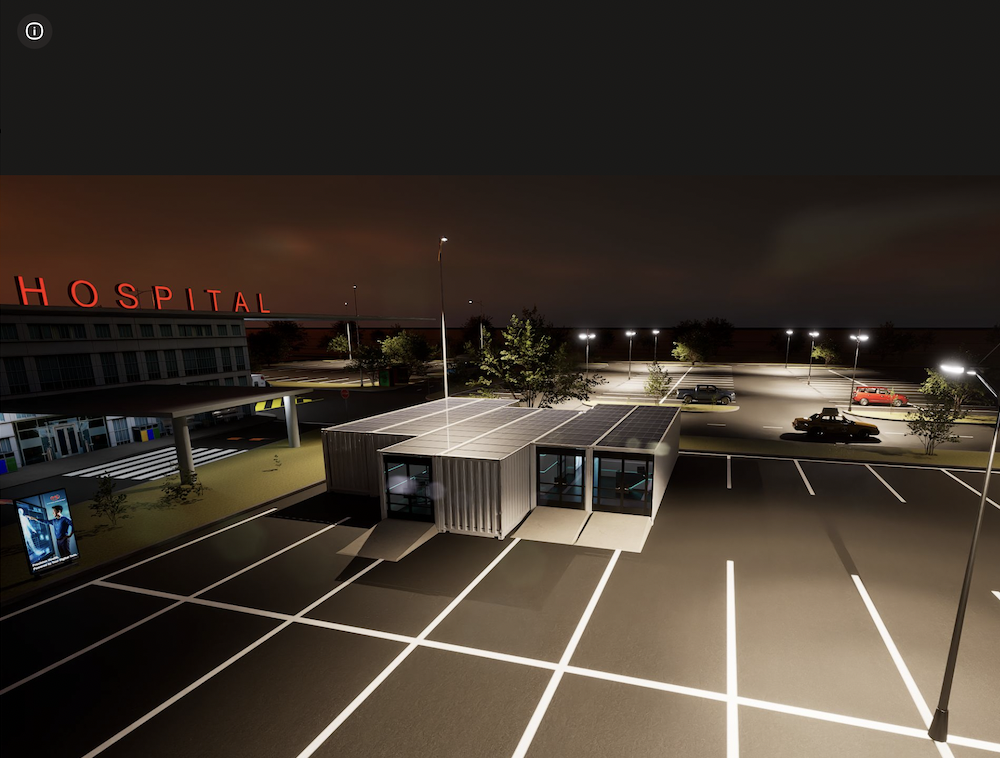
The video exemplifies a modular application of GreenBox Pods to a special purpose usage at scale — capable of standing on a parking lot, atop a foundation slab, or over an underground facility — always classified as personal property, yet engineered to exacting specifications. From initial touchdown to full activation, the IIS Pod turns any prepared site into an intelligent process node.
The process begins with the installation of the GreenFrame Pad or each Pod, a self-leveling, storm-rated foundation engineered to receive modular intermodal structures while maintaining personal property classification.
Once leveled and anchored, the first GreenBox – Beyond Mil Spec premium intermodal container is positioned and affixed to the Pad.
Its applicable sidewall cassettes are removed and relocated inside the unit to serve as interior partitions, insulation layers, or protective panels as required.
Next, a second GreenBox container is aligned parallel to the first.
Its companion-facing sidewall cassettes are removed to create a continuous 16′ × 40′ interior space, with an 8′ × 16′ rear service bay connecting the two modules.
The adjoining walls are secured through magnetic fasteners positioned at the upper and lower corner castings, as well as along the facing 8′ and 10′ side castings, locking both structural alignment and energy conduction across the Companion Container Set.
The exterior sidewall of the second container can also have select cassettes removed, enabling direct passage into an adjoining Companion Container Set, allowing modular expansion of the structure.
Each removed cassette is reinstalled as an interior wall element within the finished space, preserving full thermal, kinetic, and electromagnetic continuity.
This sequence is repeated until the first-floor layout is complete, after which construction advances vertically — installing additional container tiers using identical interlocks.
Once the full Pod framework is established, modular interior systems are inserted: energy and data distribution arrays, environmental controls, and scanning or mission-specific equipment.
The result is a rapidly assembled, high-stability facility — from foundation to fully functional Pod — with all energy, structural, and digital systems unified through the GreenFrame™ interface.
The O|Zone Initiative unites local governments, private enterprise, and advanced infrastructure developers to strengthen community services and elevate Quality of Life.
Through a network of Port Authority Opportunity Zones (PAOZs), O|Zone is designed to transform underutilized land and facilities into engines of innovation — creating jobs, improving healthcare access, expanding broadband and clean energy, and fostering resilient local economies.
Every O|Zone project operates through a Private | Public | Partnership framework, aligning long-term community benefit with sustainable private investment.
Together, these partnerships form a living ecosystem of modern infrastructure — each site a gateway for technology, trade, and opportunity.
Becoming an O|Zone Developer Partner
Every IIS Pod site begins with land. That’s where the developer group comes in. Whether it’s an individual with local development experience, a regional partnership, or a construction consortium, these are the people who identify, prepare, and deliver the ground-ready locations where each IIS Pod will live.
1. The Role of the Developer
The developer’s job is to take a raw piece of land—often within a Qualified Opportunity Zone—and transform it into a fully prepared site capable of supporting an IIS Pod™.
That means:
Acquiring or controlling the land, often with the landowner as a joint participant.
Managing site preparation: grading, roads, parking, drainage, water, sewer, electrical, and broadband conduits.
Constructing the certified IIS Pad foundations that the modular Companion Container Sets will mount to.
Each IIS Pad can be built directly on grade or above a bunker or basement structure, depending on site conditions or design requirements. These sub-structures can house mechanical systems, shielded power nodes, or entropy recovery hardware—all connected upward into the GreenBox containers that form each IIS Pod.
2. Private-Sector Development, Public-Sector Ownership
All of this early work—the site acquisition, design, and construction—is done privately by the developer. That’s deliberate. It avoids the time, cost, and constraints of public-sector bidding during the build-out phase and keeps local control in the hands of experienced professionals.
Once the site is complete, the developer sells the finished property to the O|Zone Governmental Authority—a special-purpose authority established by the county as part of the broader O|Zone Initiative.
The purchase is funded through tax-exempt municipal revenue bonds issued by that authority. These bonds are non-recourse to the county and are secured solely by the revenue streams associated with the developed infrastructure.
3. The Lease-Back Framework
Immediately following the sale, the development group leases the site back from the authority. The lease term is 20 years, fully prepaid at closing, with multiple renewal options extending up to 99 years.
This structure provides: The developer with a tax-advantaged synthetic bond-like position, effectively capturing the long-term value of a municipal lease without having to issue its own debt.
The authority with an upfront capital inflow from the prepaid lease, strengthening its position to finance additional infrastructure or reserve funds.
This creates a public–private alignment where the developer holds long-term operational control and revenue participation, while the governmental authority retains title and statutory bond status.
4. Why It Matters
For counties, this model delivers ready-to-use infrastructure without taxpayer funding. For developers, it offers a repeatable, scalable business: acquire land → prepare sites → sell to authority → lease back → participate in the ongoing revenue from IIS Pod operations.
Because each site is built within the O|Zone framework, the developer benefits from Qualified Opportunity Zone treatment, local economic incentives, and access to the HGVS national platform of IIS Pod deployment opportunities.
5. The Financial Foundation
This lease-sale-leaseback framework is more than a transaction—it’s the foundation of the IIS Pod ecosystem. It ensures that every site is privately executed, publicly owned, bond-financed, and sustainably operated.
It gives developers a way to build permanent, income-producing assets while delivering essential infrastructure that supports process objectives, research innovation, and community economic renewal—all within the O|Zone bond and trust structure.